
Winter Hair Fall: Why It Happens and a Herbal Routine That Works

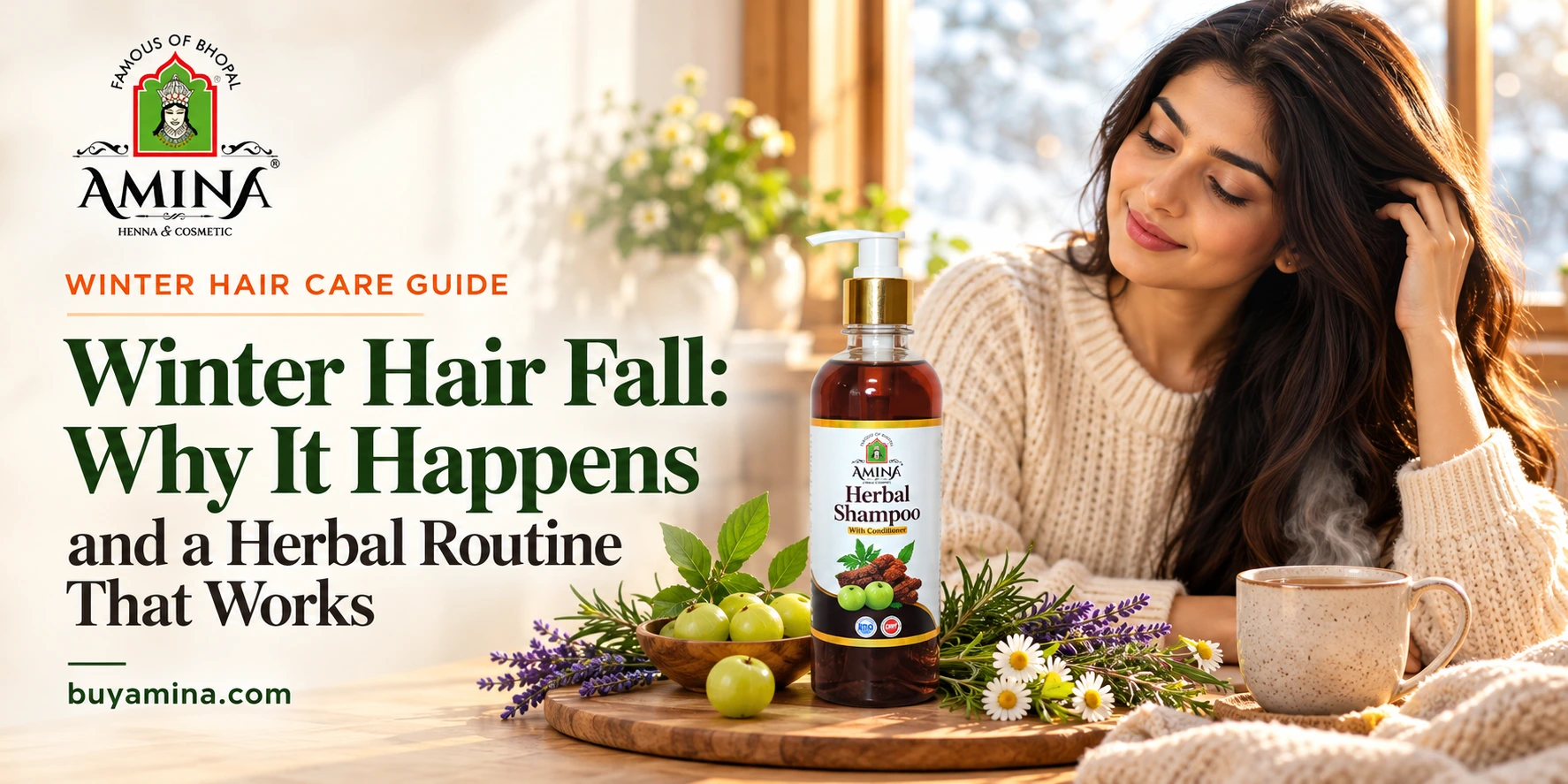
Winter mornings in India often start with a hot head bath, a quick hair wash and a woollen cap pulled over damp hair. By evening, there are more strands on your comb, dry ends around your shoulders and an itchy scalp under your scarf. If this sounds familiar, you need winter hair fall remedies that fit into a real daily routine.
Cold weather does not have to mean weak hair. Low humidity, hot water, rough handling and a dry scalp are what make hair break more in winter. A few simple changes, along with gentle herbal hair care, can protect your hair right through to February.
Quick Answer: What Are the Best Winter Hair Fall Remedies?
The most effective winter hair fall remedies are washing with lukewarm water, using a gentle herbal shampoo, conditioning the lengths, drying hair before wearing a cap and detangling with a wide-tooth comb. A light scalp massage and a protein-rich diet also support healthy hair. If hair loss is sudden or keeps increasing, see a doctor or dermatologist.
Why Does Winter Make Hair Fall Worse?
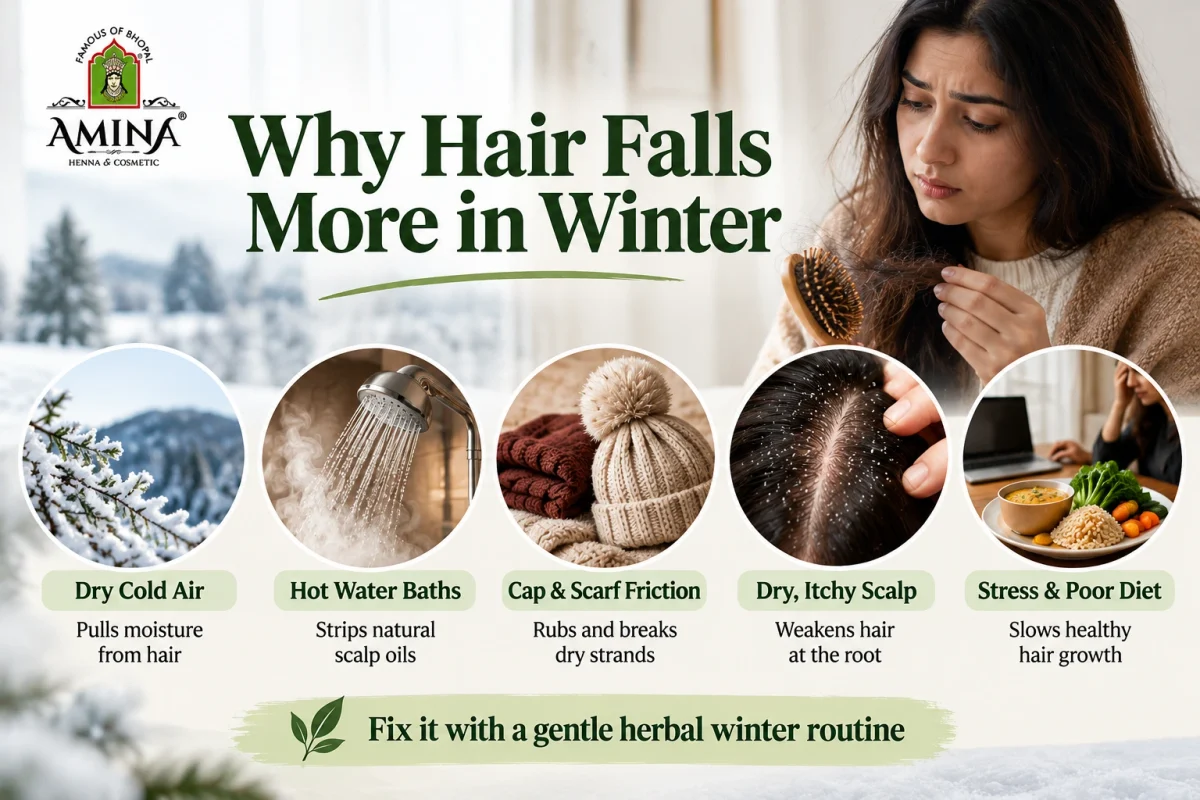
Winter hair fall usually comes from several small habits working together. Once you know the causes, choosing the right routine becomes easy.
1. Cold Air and Low Humidity
Cold outdoor air and dry indoor heating pull moisture out of your hair. Dry hair tangles easily, turns frizzy and snaps during combing. This is most noticeable in North and Central Indian winters, when the dry spell lasts for weeks.
2. Hot Water During Head Baths
A steaming head bath feels great on a cold morning, but very hot water strips the scalp’s natural oils. The result is a tight, itchy and dry scalp. Switch to lukewarm water. It cleans just as well without the extra dryness.
3. Dry Scalp and Winter Dandruff
A dry scalp feels tight and may flake. Dandruff is different: it often comes with oiliness and itching. Both can get worse in winter. Avoid scratching with your nails, and if flakes, redness or itching do not settle, get it checked instead of relying only on home remedies.
4. Friction From Woollen Caps and Scarves
Caps, mufflers and scarves keep you warm, but the constant rubbing tangles dry hair and causes breakage. Choose a cap with a soft lining, avoid tight hairstyles underneath it and detangle gently after taking it off.
5. Seasonal Shedding and Stress
Some seasonal shedding is normal, and not all winter hair fall is caused by the weather. Stress, recent illness, low protein or iron and hormonal changes can also increase shedding. Notice whether you are seeing broken strands or full hairs falling from the root. That difference tells you what to fix.
Summer vs Winter Hair Care: What Should You Change?
Your routine needs a few changes as the temperature drops. The goal is to keep the scalp clean while cutting down dryness and friction.
| Hair care habit | Summer | Winter |
|---|---|---|
| Water temperature | Cool or normal water | Lukewarm water, never very hot |
| Washing frequency | More often due to sweat and oil | As your scalp needs; don’t skip washes just because it’s cold |
| Conditioning | For tangles and frizz | Every wash, focused on lengths and ends |
| Scalp care | Remove sweat and buildup | Clean gently, no hard scrubbing |
| Drying | Air-dry | Dry the roots fully before wearing a cap |
| Oiling | Light, as per hair type | 1–2 times a week if it suits your scalp; wash it out well |
A Step-by-Step Herbal Winter Hair Care Routine
You don’t need a shelf full of products. Start with these seven habits and adjust them to your scalp.
Step 1: Detangle Gently Every Morning
When: Daily
Use a wide-tooth comb and start from the ends, slowly working upwards. Never pull through knots or brush hard when hair is wet.
Step 2: Massage the Scalp Without Scratching
When: Once or twice a week
Massage the scalp with your fingertips for 3–5 minutes. A little warm coconut or herbal hair oil softens dry hair and reduces friction. If you have an oily or dandruff-prone scalp, keep oil light and stop if itching increases.
Step 3: Wash With a Gentle Herbal Shampoo
When: 2–3 times a week, or as your scalp needs
Wet your hair with lukewarm water, apply shampoo mainly to the scalp and massage gently with your fingertips. A 2-in-1 like Amina Herbal Shampoo with Conditioner cleanses and conditions in one step, which saves time on cold mornings. Follow the directions on the pack.
Step 4: Condition the Lengths
When: Every wash
The middle lengths and ends are where winter dryness shows first. Conditioning makes hair easier to comb, so fewer strands break. If you use a 2-in-1 shampoo and your ends still feel dry, add a small amount of conditioner only to the ends.
Step 5: Dry Your Hair Before Stepping Out
When: After every wash
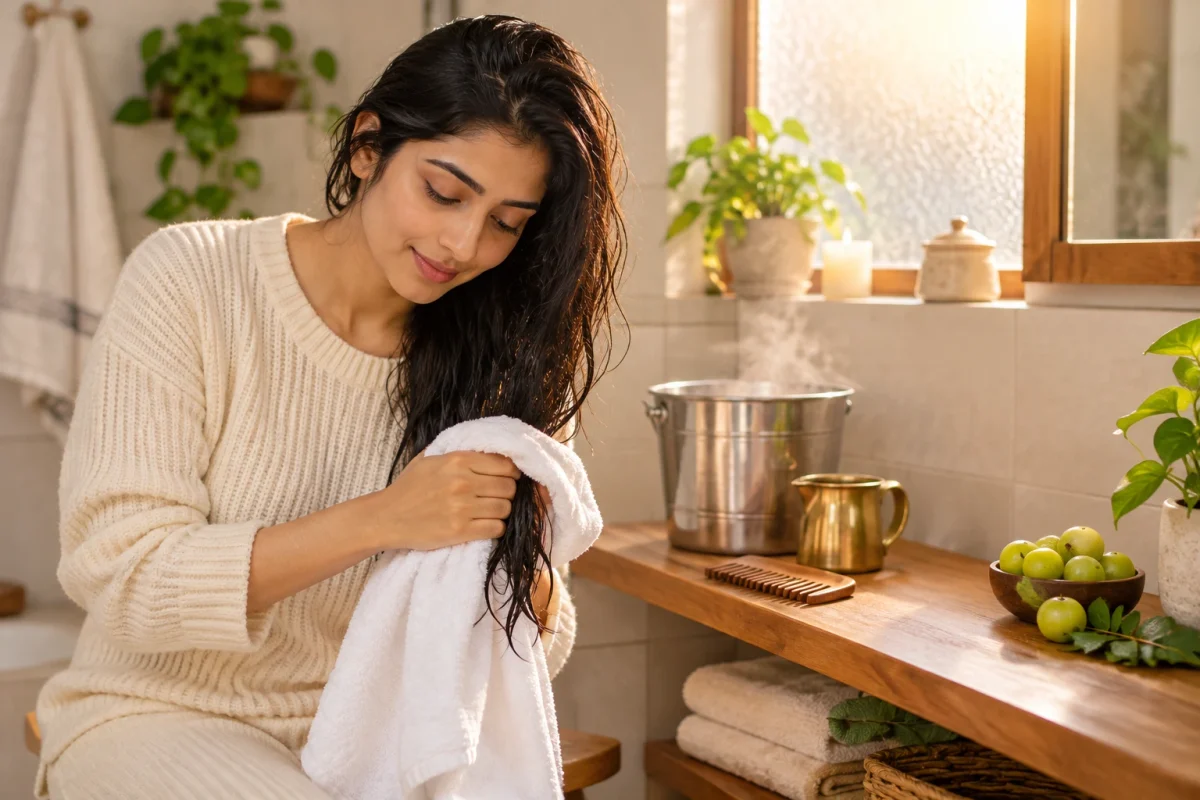
Squeeze water out with a soft cotton towel instead of rubbing. Let hair air-dry in sunlight if you can, or use a dryer on low heat. Never put a tight woollen cap on wet hair.
Step 6: Eat for Your Hair
When: Every day
Include protein in every meal: dal, chana, rajma, paneer, curd, eggs. Add seasonal winter foods like amla, green leafy vegetables, carrots, sesame (til) and jaggery. Drink enough water even when you don’t feel thirsty. Don’t start supplements without a doctor’s advice.
Step 7: Check Your Progress After 3–4 Weeks
When: Once a month
Notice whether your scalp feels calmer and your hair combs more easily. Look for fewer broken strands. If hair loss is patchy, keeps increasing or comes with scalp pain, redness or heavy scaling, see a dermatologist.
Also read: How a herbal shampoo helps with hair fall
Winter Hair Fall Myths vs Facts
Much winter hair advice is passed down in families. Some of it helps; some of it doesn’t.
| Myth | Fact |
|---|---|
| Everyone gets more hair fall in winter. | It varies from person to person. Dryness increases breakage, but heavy shedding usually has another cause. |
| Hot water cleans the scalp better. | Very hot water dries out the scalp. Lukewarm water cleans just as well. |
| Oiling every day stops hair fall. | Oil softens hair and reduces friction, but daily oiling isn’t needed and can make some scalps greasy. |
| Washing hair less in winter reduces hair fall. | Hair that falls during a wash was already shed. A dirty scalp can actually worsen itching and dandruff. |
| Herbal products suit everyone. | Plant ingredients can still cause allergies. Always do a patch test first. |
5 Herbal Ingredients That Help in Winter
Traditional Indian hair care has relied on these plant ingredients for generations.
- Amla: Rich in vitamin C and traditionally used to strengthen hair and add shine. Winter is also amla season, so eat it fresh too.
- Bhringraj: Known in Ayurveda as the “king of hair”. Commonly used in herbal oils for scalp massage.
- Methi (fenugreek): Soaked and ground into a hair mask, it softens dry hair. Rinse it out thoroughly.
- Aloe vera: Soothes a dry, itchy scalp and adds light moisture without heaviness.
- Coconut oil: Helps reduce protein loss from hair and softens dry ends. Warm it slightly in winter so it spreads easily.
Patch-test any new product or home remedy on a small area first. If you feel burning, itching or redness, wash it off and stop using it.
5 Winter Hair Care Mistakes to Avoid
- Very hot head baths: Switch to lukewarm water.
- Rubbing wet hair with a towel: Squeeze water out gently instead.
- Wearing a cap on damp hair: Dry the roots completely first.
- Ignoring persistent dandruff: Itching and flakes that don’t settle need proper treatment.
- Changing products every week: Give a routine at least 3–4 weeks before judging it.
Amina Herbal Shampoo with Conditioner for Winter Hair Care
On cold mornings, a short routine is a routine you will actually follow. Amina Herbal Shampoo with Conditioner cleanses the scalp and conditions the lengths in a single wash, so you spend less time with wet hair in the cold.
- 2-in-1: gentle cleansing and conditioning together
- Herbal formula from Amina Henna Herbal, Bhopal
- Helps keep dry winter hair soft and easier to comb
- Suitable for men and women
Use it with lukewarm water, 2–3 times a week. Check the pack for the full ingredient list and do a patch test before first use. You can explore more natural options in our herbal hair care range.
Want to know more about hair loss causes? The American Academy of Dermatology’s hair loss guide is a useful read.
Conclusion: Keep It Simple and Consistent
Winter hair care is about consistency, not more products. Wash with lukewarm water, condition your lengths, dry your hair before going out and eat well. These winter hair fall remedies help control dryness and breakage through the season. If shedding continues, get it checked. To make gentle washing part of your winter routine, try Amina Herbal Shampoo with Conditioner.
FAQs: Winter Hair Fall Remedies
Dry winter air makes hair brittle and more likely to break. Hot water baths, rough towel drying and friction from woollen caps add to it. Increased shedding isn’t always about the weather, though. If hair loss continues or is very noticeable, consult a doctor to find the cause.
Wash with lukewarm water, use a gentle herbal shampoo, condition every wash and detangle with a wide-tooth comb. Massage the scalp with warm oil once or twice a week and eat enough protein. Avoid heat styling and tight hairstyles under caps.
Most people do well with 2–3 washes a week, but it depends on how oily your scalp is and how active you are. Don’t skip washes just because it is cold. Use lukewarm water, cleanse gently and condition the lengths to manage dryness.
Yes. Mix henna with lukewarm water instead of cold, apply it in a warm room and keep your head covered while it sets. Rinse with lukewarm water and dry your hair fully before going out. Always do a patch test first. Read more in our organic henna powder guide.
Low humidity, hot water and harsh products dry out the scalp and cause itching. Dandruff or other scalp conditions can feel similar. Avoid scratching and stop any product that irritates your scalp. See a doctor if itching continues or comes with redness or heavy flaking.
A gentle herbal shampoo cleanses without stripping the scalp, which helps keep winter hair manageable and reduces breakage. Results depend on your scalp and the formula. Shampoo can’t fix every cause of hair loss, so see a professional if shedding continues.