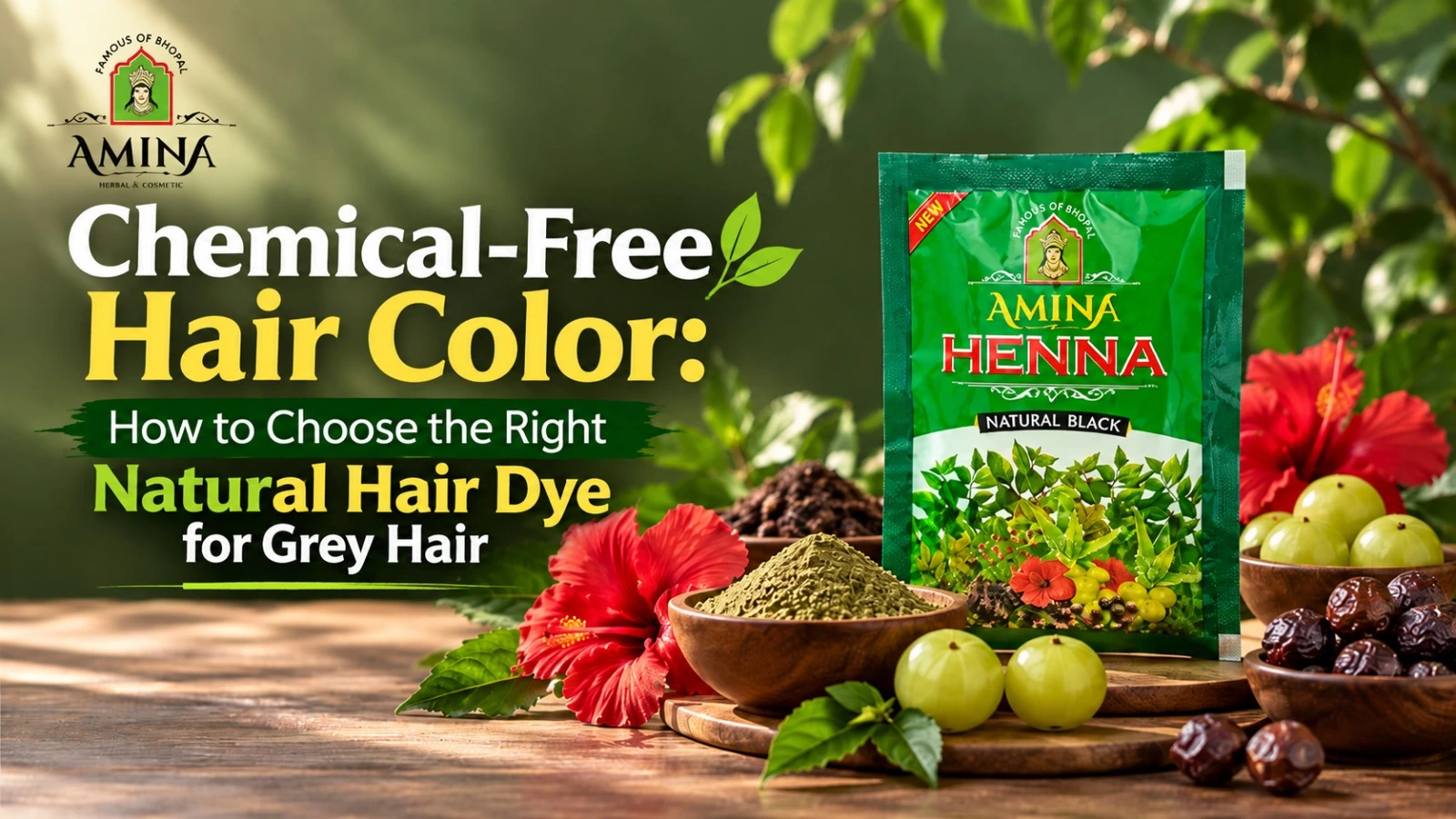
Chemical-Free Hair Color: How to Choose the Right Natural Hair Dye for Grey Hair

Finding the right hair colour is not always easy. You may want to cover grey strands, maintain your natural appearance, or try a different shade without using the same type of dye every few weeks. At the same time, reading long ingredient lists and comparing different products can make the decision confusing.
This is why chemical-free hair color has become a popular search among people looking for alternatives to conventional hair dyes.
Plant-based hair colours made with henna and other herbal ingredients offer another way to colour your hair. However, choosing the right product involves more than looking at the words “natural” or “herbal” on the packaging. You also need to understand the ingredients, the shade you can expect, how well it may cover grey hair, and the precautions required before application.
In this guide, we explain what to look for when buying natural hair colour, how plant-based colouring differs from conventional dyes, and how to select a product that suits your hair and colouring preferences.
What Does Chemical-Free Hair Color Really Mean?
The term “chemical-free hair color” is widely used in the beauty industry, but it needs some explanation. Technically, all substances, including water and plant extracts, are made of chemicals. In everyday shopping, however, the term generally refers to products formulated without certain synthetic dye ingredients or other ingredients a buyer wishes to avoid.
For example, someone searching for chemical-free hair colour may specifically want to avoid:
- Ammonia: Used in some permanent hair colours to help open the hair cuticle.
- PPD (para-phenylenediamine): A dye ingredient found in many permanent hair-colouring products that can cause allergic reactions in some people.
- Hydrogen peroxide: Used in many oxidative hair-colouring systems to develop colour and, in suitable formulations, lighten natural pigment.
- Certain synthetic colourants: Ingredients that a buyer may prefer not to use.
Not every conventional hair dye contains all these ingredients, and their roles differ by formulation.
For a plant-based alternative, check the complete ingredient list and select products that clearly state which ingredients are present and which are absent. A product described as herbal is not automatically free of every synthetic dye or safe for every person.
The aim is to make an informed choice based on the actual formulation, not just the wording on the front of the pack.
How Is Natural Hair Color Different from Conventional Hair Dye?
The main difference lies in the colouring ingredients and how the product produces its final shade.
Many permanent conventional hair dyes use oxidative colouring systems. Depending on the formula, these may combine dye precursors, an alkaline ingredient and a developer to create colour within the hair shaft.
Plant-based hair colours use colouring materials derived from plants, sometimes alongside other herbal ingredients. The exact process depends on the plants and formulation used.
Two well-known plant ingredients are henna and indigo.
Henna for reddish-brown colour
Henna comes from the leaves of Lawsonia inermis. Its natural colouring compound, lawsone, can bind to the hair and produce shades ranging from orange-red to reddish-brown, depending on the original hair colour and other factors.
Pure henna alone should not be expected to produce jet-black hair.
Indigo for darker shades
Indigo, obtained from Indigofera tinctoria, is another plant used in hair colouring. It can contribute blue-toned colour, and it is sometimes used with henna in plant-based colouring systems to produce brown or darker shades.
The final result depends on the formulation and application method. Some ready-made herbal colours use other ingredients to produce particular shades, so do not assume that every black or brown product contains the same combination of plants.
The important point is to check the ingredients and instructions for the specific product you intend to purchase.
Comparing Plant-Based Hair Color and Conventional Dye
Both approaches have a place in the hair-colouring market. The right option depends on the colour you want, the ingredients you prefer to avoid, and how you want to maintain your hair colour.
| Feature | Plant-based hair colour | Conventional hair dye |
|---|---|---|
| Colouring ingredients | Plant-derived colourants and other listed ingredients, depending on the formula | May use oxidative dyes, direct dyes or other colouring systems |
| Common colour options | Copper, reddish-brown, brown and darker shades, depending on the blend | A wide range of shades, including lightening options |
| Lightening dark hair | Usually unsuitable for significant lightening | Some formulations can lighten natural hair colour |
| Grey hair coverage | Depends on the shade, formula and proportion of grey hair | Depends on whether the formula is temporary, semi-permanent or permanent |
| Application | May require paste preparation and a longer processing time | Often comes with a developer or a ready-to-use formula |
| Allergy risk | Plant ingredients can also cause reactions | Some dye ingredients, including PPD, can cause allergic reactions |
| Maintenance | Depends on the formula, wash frequency and regrowth | Depends on the formula, wash frequency and regrowth |
Neither category guarantees damage-free results or freedom from allergic reactions. Always read the directions and ingredient list before use.
How to Choose the Right Natural Hair Color for Grey Hair
Grey hair can respond differently to colour than pigmented hair. If you have a few grey strands, you may want subtle coverage. If most of your hair is grey or white, your main priority may be a more uniform shade.
Before purchasing a product, consider these four factors.
1. Decide which shade you want
Start with the colour you want to see in natural light, rather than choosing only by the shade name on the pack.
- Black: Suitable for people looking for a darker appearance, provided the product can deliver the expected result on their starting hair colour.
- Brown: A useful option for people who prefer a softer alternative to black.
- Burgundy: Suitable for those who want a reddish or wine-toned appearance, depending on the formulation.
- Reddish-brown: A common result associated with pure henna.
Remember that a shade shown on the packaging may not look identical on your hair. Grey hair, previous colouring, natural hair colour and application time can all affect the outcome.
2. Consider how much grey hair you have
A person with a few grey strands may get a different result from someone whose hair is predominantly white.
Grey strands can appear lighter or brighter after colouring because they start with less natural pigment. Dark hair may show a subtler change, while white or grey sections can display a more noticeable colour difference.
For this reason, test the chosen product on a small, inconspicuous hair section before applying it to your entire head. This helps you judge the shade and coverage more accurately.
3. Check the complete ingredient list
Do not base your decision solely on packaging terms such as natural, organic, herbal or chemical-free.
Read the label to identify the actual colouring ingredients. If you are avoiding PPD, ammonia, peroxide or a particular colourant, verify the specific product’s formulation rather than relying on general claims about natural hair colour.
You can also contact the manufacturer if the ingredient list is unclear.
4. Think about your previous hair treatments
If your hair has recently been bleached, chemically straightened, permed or coloured, the condition and previous treatments may affect the result.
Some plant-based colourants can be difficult to remove, and subsequent chemical services may produce unpredictable colour results. Tell your hair professional which product you used before bleaching or applying another dye.
Choosing a new colour carefully at the beginning can help avoid unnecessary corrections later.
How to Read a Hair Color Label Before Buying
Product descriptions can sound similar even when the formulations differ. A careful label check helps you choose a product that meets your requirements.
Use this checklist while shopping:
- Full ingredients: Look for a complete list of ingredients rather than a broad claim about herbal ingredients.
- Colouring ingredients: Identify which plants or other colourants provide the shade.
- Ingredients you wish to avoid: Check specifically for PPD, ammonia, peroxide or other substances relevant to your preferences.
- Application instructions: Confirm the required preparation, quantity, processing time and rinsing method.
- Safety precautions: Read warnings, allergy-testing instructions and restrictions on use.
- Manufacturer details: Check the company name, batch information, expiry or use-by details where provided, and customer support information.
Buying from an established brand can make it easier to obtain product information and assistance. However, the actual label and the directions for the particular product should guide your decision.
How to Apply Plant-Based Hair Color More Carefully
Correct application matters as much as shade selection. A well-chosen colour can still produce uneven results if the hair is not prepared properly or the directions are ignored.
Step 1: Read the product instructions
Different hair colour products may require different preparation methods and application times. Do not apply one product according to another product’s directions.
Step 2: Perform the required allergy test
Follow the package instructions for the skin allergy test before every use. The US Food and Drug Administration advises testing before each application of hair dye and explains that a reaction may still occur even after a negative test.
Do not use the product if the test causes itching, redness, swelling or another reaction. Seek advice from a healthcare professional if you are unsure which ingredient caused a previous reaction.
Step 3: Prepare the hair colour as directed
Some powders require mixing with water, while ready-to-use products may have a different process. Use the specified quantities and avoid adding extra ingredients unless the manufacturer recommends them.
Step 4: Apply evenly
Wear suitable gloves and follow the instructions for sectioning and distributing the colour. Keep the product away from your eyes and other areas not approved for its use.
Never use hair colour to dye your eyebrows or eyelashes at home.
Step 5: Observe the recommended processing time
Leaving colour on longer than directed does not guarantee better coverage. It may increase irritation or lead to a result that differs from the intended shade.
Step 6: Rinse and assess the result
Rinse according to the product instructions. Allow the hair to dry before judging the final appearance, and follow any additional care directions supplied with the product.
For further safety information, read the FDA’s hair dye guidance.
Common Mistakes to Avoid When Using Natural Hair Color
Even when you choose a plant-based product, a few simple mistakes can affect the result.
Expecting pure henna to produce jet-black hair: Pure henna generally produces reddish shades. Darker results require a suitable formulation containing additional colouring ingredients.
Skipping the strand test: A small test section helps you judge colour and coverage before treating all your hair.
Assuming that natural means allergy-free: Plant extracts and other natural ingredients can also cause reactions. Follow the prescribed allergy-testing instructions.
Mixing different hair colours without guidance: Combining products can create unpredictable results. Use only combinations recommended by the manufacturers.
Ignoring previous hair treatments: Bleached, coloured or chemically treated hair may respond differently to a new product.
Leaving the product on for too long: Always observe the recommended processing time.
Expecting every grey strand to match perfectly: Differences in original hair colour and strand thickness can affect the final shade. A strand test provides a more realistic idea of the likely result.
Chemical-Free Hair Color from Amina Henna Herbal
At Amina Henna Herbal (India) Pvt. Ltd., the hair-colour range includes black, brown and burgundy options for people looking for herbal hair-colouring products.
The most suitable option depends on your preferred shade, your starting hair colour and the type of product you want to use.
Here are three options to consider:
- Amina Natural Black Henna Hair Color: For buyers looking for a black hair-colour option.
- Amina Henna Natural Brown: For those who prefer a brown shade.
- Amina Herbal Henna Brown: A herbal brown hair-colour blend featuring henna and other listed ingredients.
You can also compare the available shades in the Amina Hair Color Collection.
Before ordering, review the current product description, complete ingredient list and instructions for your selected variant. This is particularly important if you are avoiding a specific dye ingredient or have a history of hair-colour allergies.
Amina Henna Herbal is based in Bhopal, Madhya Pradesh, and serves customers through its online store at buyamina.com.
Frequently Asked Questions About Chemical-Free Hair Color
The term usually refers to hair-colouring products made without certain ingredients that buyers wish to avoid, such as ammonia or PPD. Since all substances are made of chemicals, checking the actual ingredient list is more useful than relying on the term alone.
It depends on your requirements and the formulation. Plant-based hair colours may suit people who prefer plant-derived colouring ingredients, while conventional dyes may offer lightening options and a wider range of predictable shades. Both can cause unwanted reactions, so product selection and correct use matter.
Yes, some plant-based hair colours can colour grey hair. The degree of coverage depends on the ingredients, shade, application method and original hair colour. Always test the product on a small section before full application.
The best choice depends on your desired shade and how much grey hair you have. Black, brown and reddish shades may produce different results on grey strands. Select a suitable product and follow the manufacturer’s instructions.
Pure henna generally produces orange-red to reddish-brown shades rather than jet black. Indigo and other suitable colouring ingredients may be used in plant-based systems to produce darker shades.
No. Ammonia-free means that ammonia is not included in the formulation. The product may still contain other colouring ingredients, so review the full label if you want to avoid particular substances.
No product can be guaranteed suitable for everyone simply because it is PPD-free. Other ingredients may also cause allergic reactions or irritation. Read the ingredient list and follow the prescribed allergy-testing instructions.
Colour retention varies by formulation, original hair colour, washing frequency and hair condition. Some shades fade gradually, while certain plant-based colourants may remain visible for a long time. Follow the care directions supplied with your product
Possibly, but the result depends on the previous dye, current hair condition and new formulation. Test a small hair section first and consult a hair professional before combining plant-based colour with bleaching or other chemical treatments.
You can compare black, brown and burgundy options in the Amina Henna Herbal Hair Color Collection. Check each product’s shade, ingredients, pack details and directions before placing an order.
Final Thoughts
Choosing chemical-free hair color starts with understanding what you want to avoid and what result you expect. The words natural and herbal can be useful starting points, but the ingredient list, shade information and application instructions are what help you make a more informed choice.
For grey hair, consider your preferred shade, the proportion of grey strands and your previous hair treatments before selecting a product. Always follow the manufacturer’s allergy-testing and application directions.
If you are looking for black, brown or burgundy herbal hair colour, visit the Amina Henna Herbal Hair Color Collection to compare the available options and select a product that fits your needs.